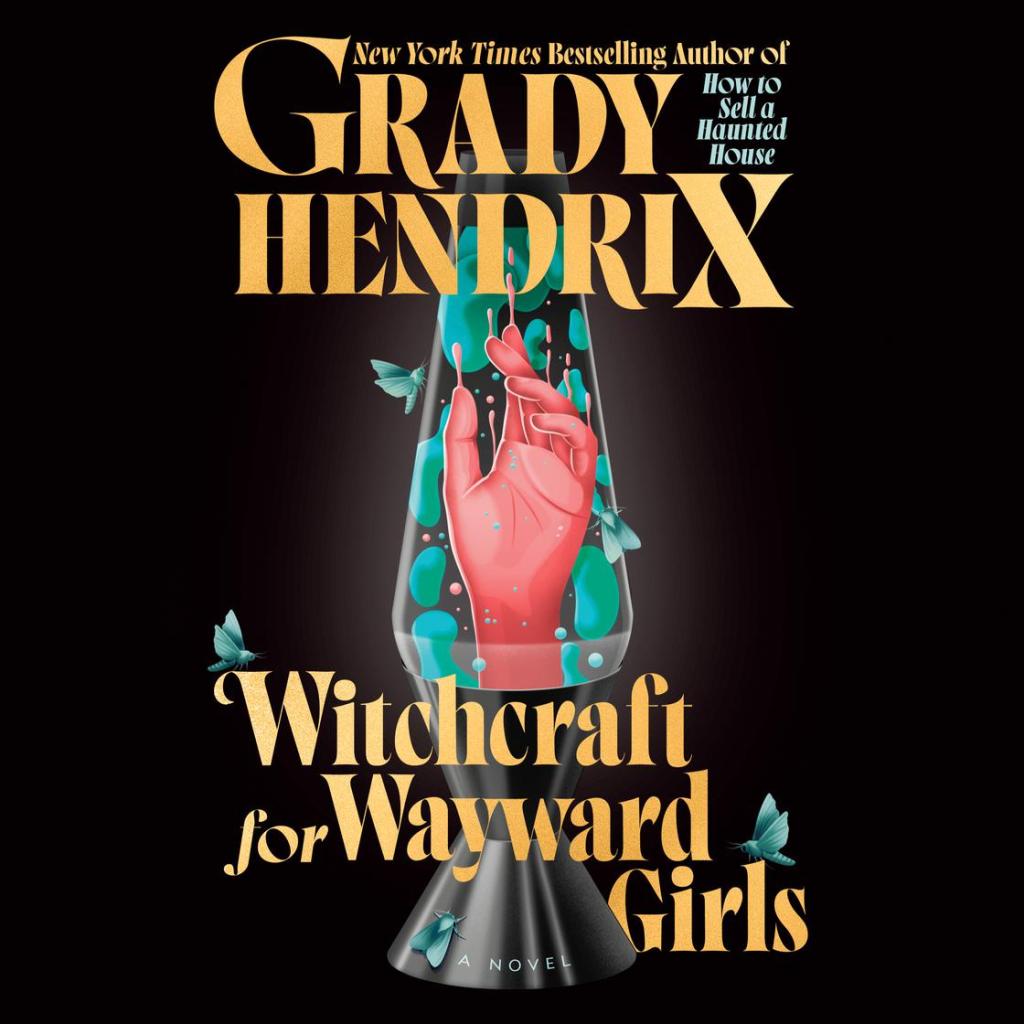
Title: Witchcraft for Wayward Girls
Author: Grady Hendrix
Format: Audiobook
Rating: 🖤🖤🖤🖤
Publisher’s Summary
There’s power in a book….
They call them wayward girls. Loose girls. Girls who grew up too fast. And they’re sent to Wellwood House in St. Augustine, Florida, where unwed mothers are hidden by their families to have their babies in secret, to give them up for adoption, and most important of all, to forget any of it ever happened.
Fifteen-year-old Fern arrives at the home in the sweltering summer of 1970, pregnant, terrified and alone. Under the watchful eye of the stern Miss Wellwood, she meets a dozen other girls in the same predicament. There’s Rose, a hippie who insists she’s going to find a way to keep her baby and escape to a commune. And Zinnia, a budding musician who plans to marry her baby’s father. And Holly, a wisp of a girl, barely fourteen, mute and pregnant by no-one-knows-who.
Everything the girls eat, every moment of their waking day, and everything they’re allowed to talk about is strictly controlled by adults who claim they know what’s best for them. Then Fern meets a librarian who gives her an occult book about witchcraft, and power is in the hands of the girls for the first time in their lives. But power can destroy as easily as it creates, and it’s never given freely. There’s always a price to be paid…and it’s usually paid in blood.
What I Loved
Set in the 1970s, this realistic portrayal of the everyday experience of unwed pregnant mothers in a pre-Roe world was the scariest part of the novel. Hendrix does not shy away from portraying the systemic dehumanization, shame, and erasure faced by young women at the Wellwood home. Fern, Rose, Zinnia, Holly, and the others are branded as immoral, unintelligent, or deserving of their suffering, with little acknowledgment of the broader societal forces that placed them there. Many of them were victims of abuse and coercion, yet the burden of shame and consequence falls squarely on their shoulders, while the men responsible remain unscathed.
The witchcraft themes gave the girls a small measure of control in their powerless situations, starting with their introduction to magic by the somewhat sinister librarian Miss Parcae. Their first forays into using the spellbook seem harmless enough, but the girls need to be careful what they wish for as things quickly spiral out of their control. Along the way they meet a compelling yet unsettling group of women in Miss Parace’s coven, form lasting friendships over their shared trauma, and get more than they bargained for from the spellbook. The ending was beautiful and really circled back around to the themes of love, hope, and reconciliation.
What I Didn’t
While I enjoyed Witchcraft for Wayward Girls overall, there were a few elements that didn’t work as well for me. The witchcraft takes a while to fully emerge in the story, slowing down the first portion of the book. Given the premise, I would have loved to see the magical elements woven in sooner and to be leaned into more heavily. Also, some of the body horror scenes felt particularly prolonged and intense. While I understand their purpose, and expected a fair amount going into it, some scenes felt more excessive than necessary. Of course, this is a matter of personal preference and readers who enjoy graphic and visceral horror will likely appreciate these scenes more than I did.
Favorite Line
“Knowledge is a kind of power, and the knowledge you find in this book will help you find power inside yourself. Power is not a material possession that can be given. Power is the ability to act and that must always be taken, for no one will ever give that power to you. Those who have power wish to keep it, and those who want power must learn to take it.”
Grady Hendrix, Witchcraft for Wayward Girls
Last Words
Witchcraft for Wayward Girls is a story of resistance. With a potent mix of rage, magic, and hope, this is a novel that refuses to romanticize the past and instead demands that we reckon with its ongoing consequences.

 The Haunted Quill
Leave a comment